Updated October 22, 2026, before Nebraska’s match against UCLA.
Nebraska has put itself exactly where its fans hoped it would be: at the front of the Big Ten volleyball race. The Huskers enter October 22 with a 19–0 overall record and an 8–0 conference record, holding first place ahead of Oregon and Wisconsin. Both challengers are one match back at 7–1.
That is a strong position, but there is still plenty to settle. Nebraska has difficult road matches ahead, its closest rivals remain within reach, and a new conference tournament changes what teams are playing for down the stretch.
For Husker fans, the encouraging part is how Nebraska has built its lead. The results include a convincing win over Wisconsin and a composed response when Purdue interrupted its run of conference sweeps.
Big Ten Volleyball Standings 2026
Here is the conference picture entering the October 22 matches. Tied positions below reflect identical conference records; they are not projected tournament seeds.
| Position | Team | Big Ten record | Overall record |
|---|---|---|---|
| 1 | Nebraska | 8–0 | 19–0 |
| T-2 | Oregon | 7–1 | 16–2 |
| T-2 | Wisconsin | 7–1 | 13–5 |
| 4 | UCLA | 6–2 | 15–4 |
| T-5 | Michigan State | 5–3 | 15–3 |
| T-5 | Washington | 5–3 | 14–3 |
| T-5 | Penn State | 5–3 | 13–5 |
| T-5 | Minnesota | 5–3 | 11–5 |
| T-9 | Purdue | 4–4 | 11–6 |
| T-9 | Indiana | 4–4 | 11–6 |
| T-9 | Illinois | 4–4 | 12–7 |
| T-12 | Michigan | 3–5 | 12–7 |
| T-12 | Ohio State | 3–5 | 10–8 |
| T-14 | Maryland | 2–6 | 12–7 |
| T-14 | USC | 2–6 | 8–10 |
| T-16 | Iowa | 1–7 | 12–10 |
| T-16 | Rutgers | 1–7 | 10–10 |
| 18 | Northwestern | 0–8 | 7–12 |
Records are a dated snapshot and will change as matches finish.
A one-match advantage gives Nebraska control of its own finish. Keep winning, and the Huskers stay ahead without needing help elsewhere. It also leaves little room to relax: one Nebraska loss, paired with another win by a challenger, could bring the leaders level.
Why Nebraska’s Win Over Wisconsin Matters
The October 10 meeting with Wisconsin remains one of Nebraska’s strongest statements of the season. The Huskers swept the Badgers 25–23, 25–14, 25–20, with Harper Murray producing 20 kills on .471 hitting.
Nebraska hit .396 as a team, held Wisconsin to .171, and finished with a 9–2 blocking advantage. Bergen Reilly supplied 39 assists, while Andi Jackson added 11 kills.
Those numbers show why the result matters beyond the win column. Nebraska generated efficient offense while making Wisconsin work much harder for its points. Against a direct conference rival, that combination is a persuasive sign of a team capable of setting the pace.
The opening set also offers a useful detail. Wisconsin closed to 24–23 before Murray delivered the winning kill. Nebraska had to finish a tight set before taking firmer control of the match. That ability to handle pressure matters when a conference race starts turning on a few late points.
The Purdue Match Showed Another Side of the Huskers
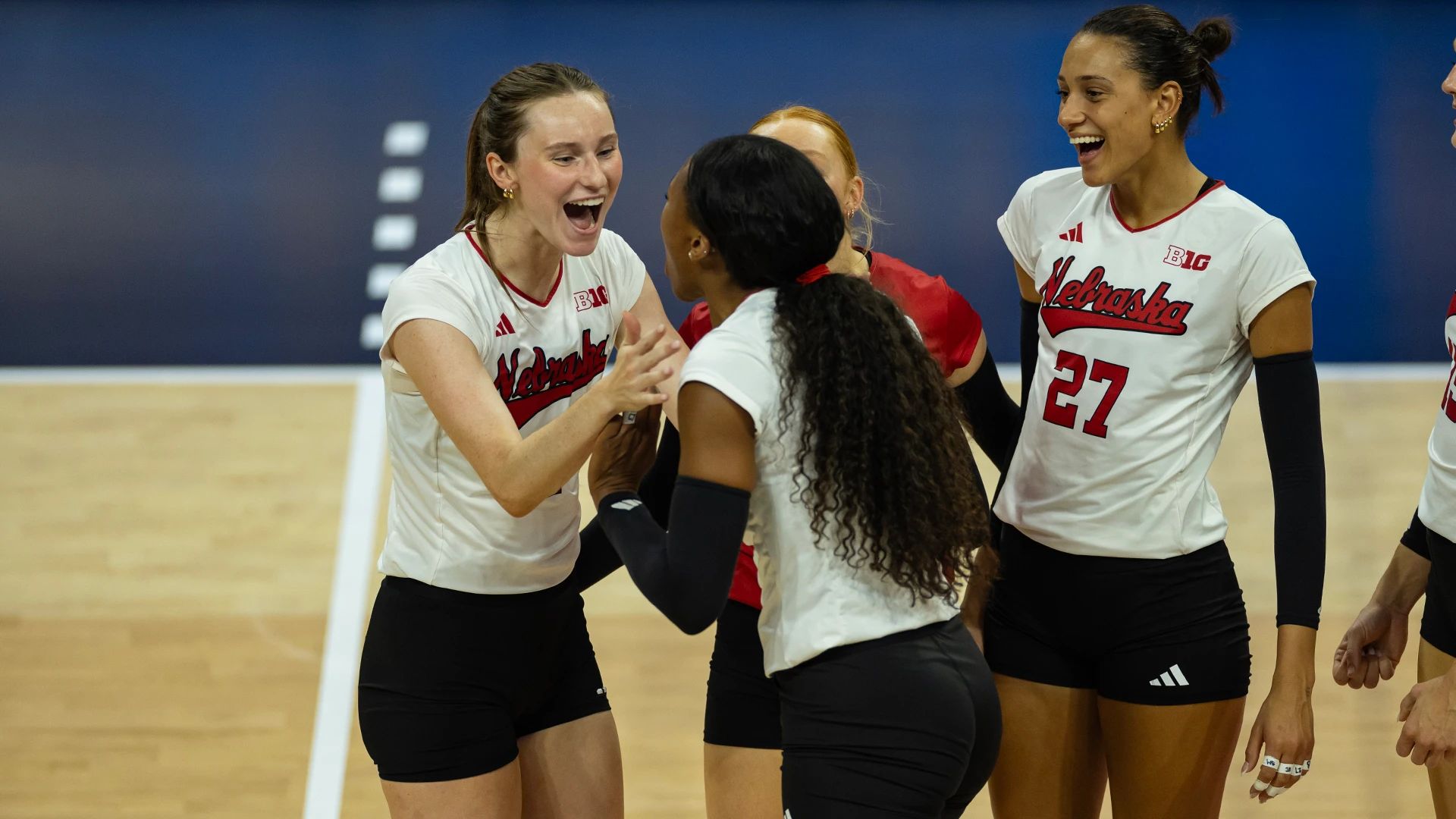
Purdue handed Nebraska its first lost set of Big Ten play on October 17. The Huskers responded by winning the next two sets and completing a 3–1 victory. Four Nebraska players reached double figures in kills.
For a team protecting an unbeaten record, that response is reassuring. A dropped set can change the feel of a match quickly. Nebraska regained control and prevented a difficult stretch from becoming a damaging result.
Teraya Sigler’s contribution deserves attention. She recorded a career-high 15 kills against Purdue and earned Big Ten Player of the Week honors after averaging 3.29 kills per set on .391 hitting across the Northwestern and Purdue matches. Olivia Mauch received the conference’s Defensive Player of the Week award.
The takeaway is encouraging: Nebraska has several players capable of influencing a match. That gives opponents more to prepare for and gives the Huskers options when one part of their game is under pressure.
Oregon and UCLA Keep the Race Interesting
Oregon enters this stretch with seven consecutive victories, including a five-set win over Indiana and a four-set win over Rutgers. The Ducks have been finding ways through competitive matches, which makes their meeting with Nebraska particularly interesting.
UCLA also brings momentum into Lincoln. The Bruins recently beat Penn State in five sets and followed that with another five-set victory over Ohio State, extending their winning streak to five.
Those results are a reminder that the table does not tell the whole story. A team’s current form can make an upcoming match more difficult than its season record suggests. Nebraska’s immediate task is to handle the opponent across the net while the wider race develops around it.
Nebraska’s Remaining Big Ten Schedule
Nine conference matches remain before the tournament:
| Date | Opponent | Location |
|---|---|---|
| October 22 | UCLA | Home |
| October 24 | USC | Home |
| October 30 | Michigan | Away |
| October 31 | Michigan State | Away |
| November 7 | Oregon | Away |
| November 8 | Washington | Away |
| November 12 | Illinois | Home |
| November 14 | Iowa | Home |
| November 17 | Minnesota | Home |
The November 7–8 trip to Oregon and Washington stands out as a potentially decisive stretch. Nebraska will face a close challenger in Eugene and then play again the following day in Seattle. The quick turnaround adds another challenge: recover, adjust to a different opponent, and maintain the same level of execution.
The Michigan trip also puts matches on consecutive days. These weekends will test how well Nebraska sustains its performance through travel and limited recovery time.
First, though, come two home matches. Nebraska hosts UCLA on October 22 at 6 p.m. Central on FS1, followed by USC on October 24 at 8 p.m. Central on BTN.
Fans can follow the Nebraska volleyball schedule for upcoming opponents, match times, television information, and results.
How the New Big Ten Tournament Changes the Stakes
There is a major change to understand in 2026. The Big Ten now uses a 17-match conference schedule, with every team facing each of the other conference members once. The league’s inaugural volleyball tournament takes place November 20–25 at Fishers Event Center in Fishers, Indiana.
The top 15 teams qualify. Seeds 10–15 begin in the opening round, seeds 5–9 receive one bye, and the top four seeds receive a double bye into the quarterfinals.
That makes a high finish especially valuable. A top-four seed needs three tournament victories to win the championship. Starting in the opening round requires five.
For Nebraska, the practical priorities are connected: protect the lead, secure the strongest possible seed, and arrive ready for elimination matches. Finishing first in the standings would provide an excellent position, but the tournament trophy still has to be won on the court.
What Nebraska Needs to Do Next
The next step is consistency. Nebraska needs reliable serve receive so its setter can keep multiple attackers involved. It needs to turn defensive touches into controlled attacking opportunities. And when a set becomes close, it needs patient decisions instead of giving away points while trying to force a finish.
Those are the details worth watching alongside the standings. Winning comfortably is encouraging, but so is recovering from a slow start, stopping an opponent’s service run, or closing a set that could go either way.
Based on the results so far, Nebraska deserves to be viewed as the team to catch. The Wisconsin performance showed its ceiling; the Purdue response showed that losing a set does not have to derail a match.
The coming weeks will test both qualities. Husker fans have good reason to feel confident, with enough competitive matches left to make every result worth following.